Why so many cameras?
When we plan a multi camera interview setup, usually 2 will do;
- an "A" angle (usually medium torso shot)
- and "B" angle (either tighter framing or sometimes a wider frame if we want to show off the location).
Most interview framing composition goes this way and this is the standard for professional video production, whether that is a cinematic documentary interview or a corporate talking head piece. For both we use our Sony FX6 cameras.
So what could possibly justify using 5?
There’s a moment in every interview where something shifts.
It might be a subtle pause before answering, a softening of tone. That moment is usually where the story actually lives, and the framing tells this story.
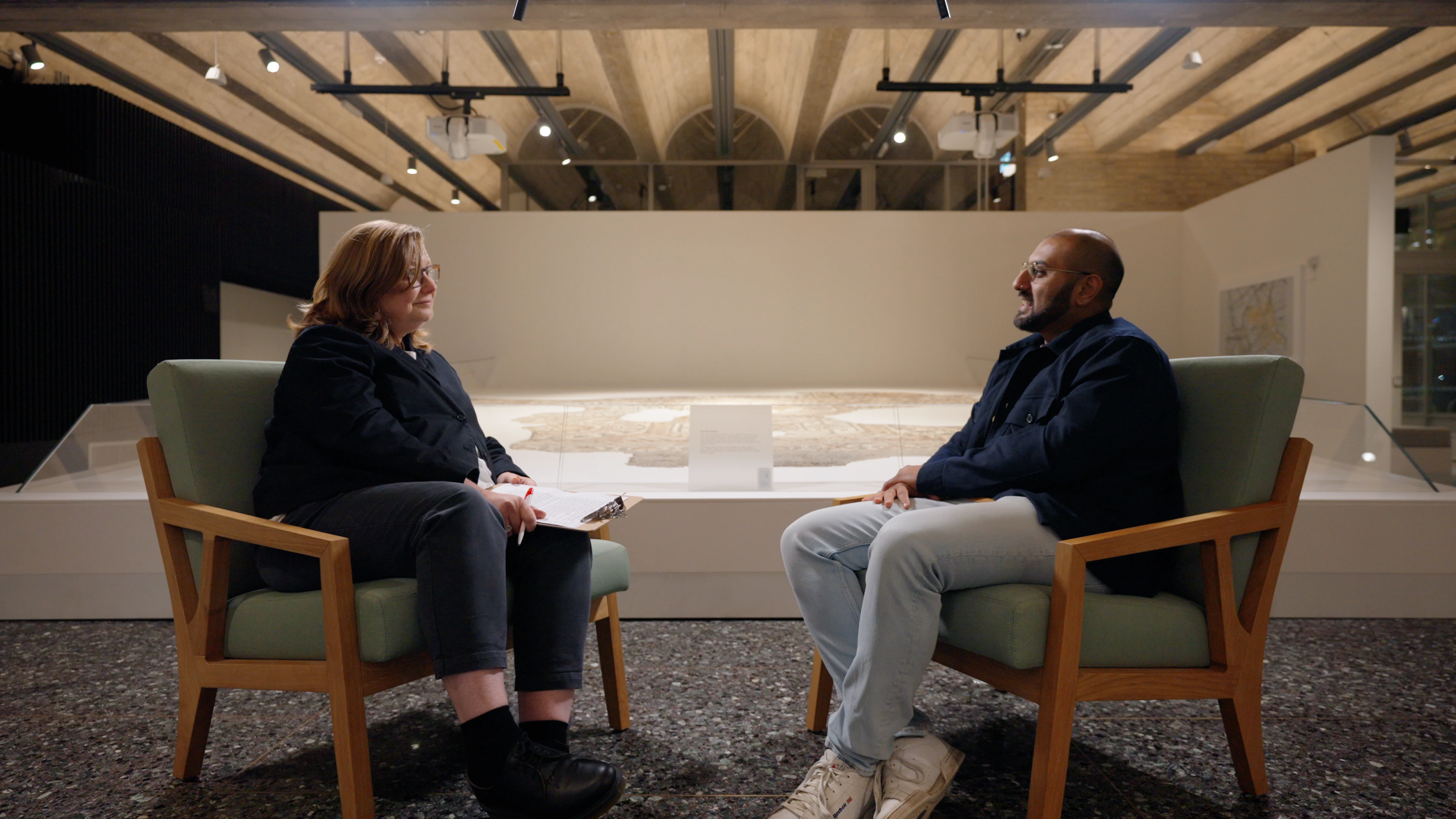
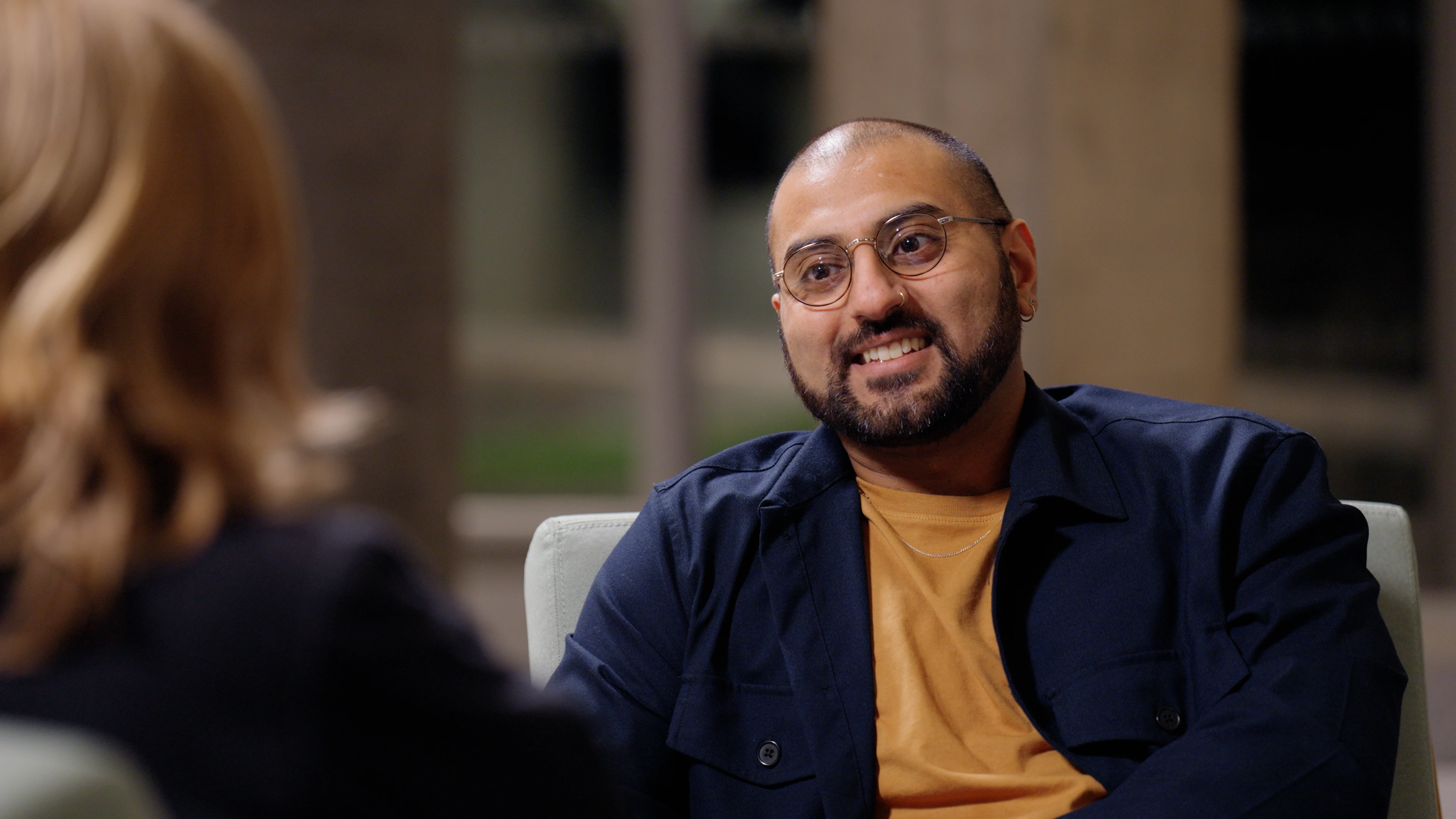
When Akshay Sharma was Interviewed by Emma Parker about his recent title of Leicester's first Poet Laureate, we chose to shoot with 5 angles because the intention behind the framing mattered.
The camera A (Sony FX3) provided context for the set with a wide shot on a motorised slider.
Camera B and C, the 'dirty' over-shoulder shots, made Shay and Emma feel connected and grounded in the conversation.
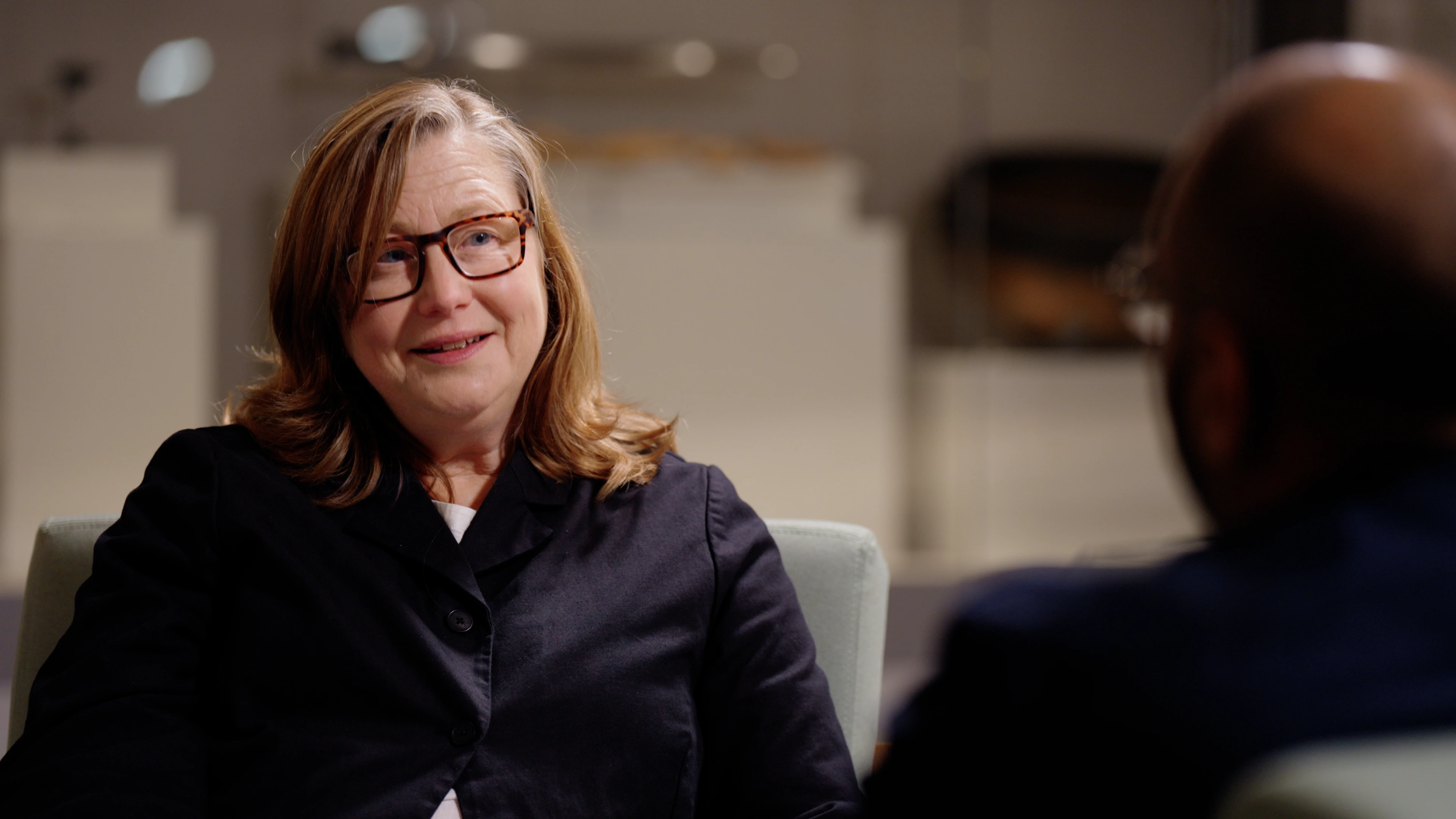
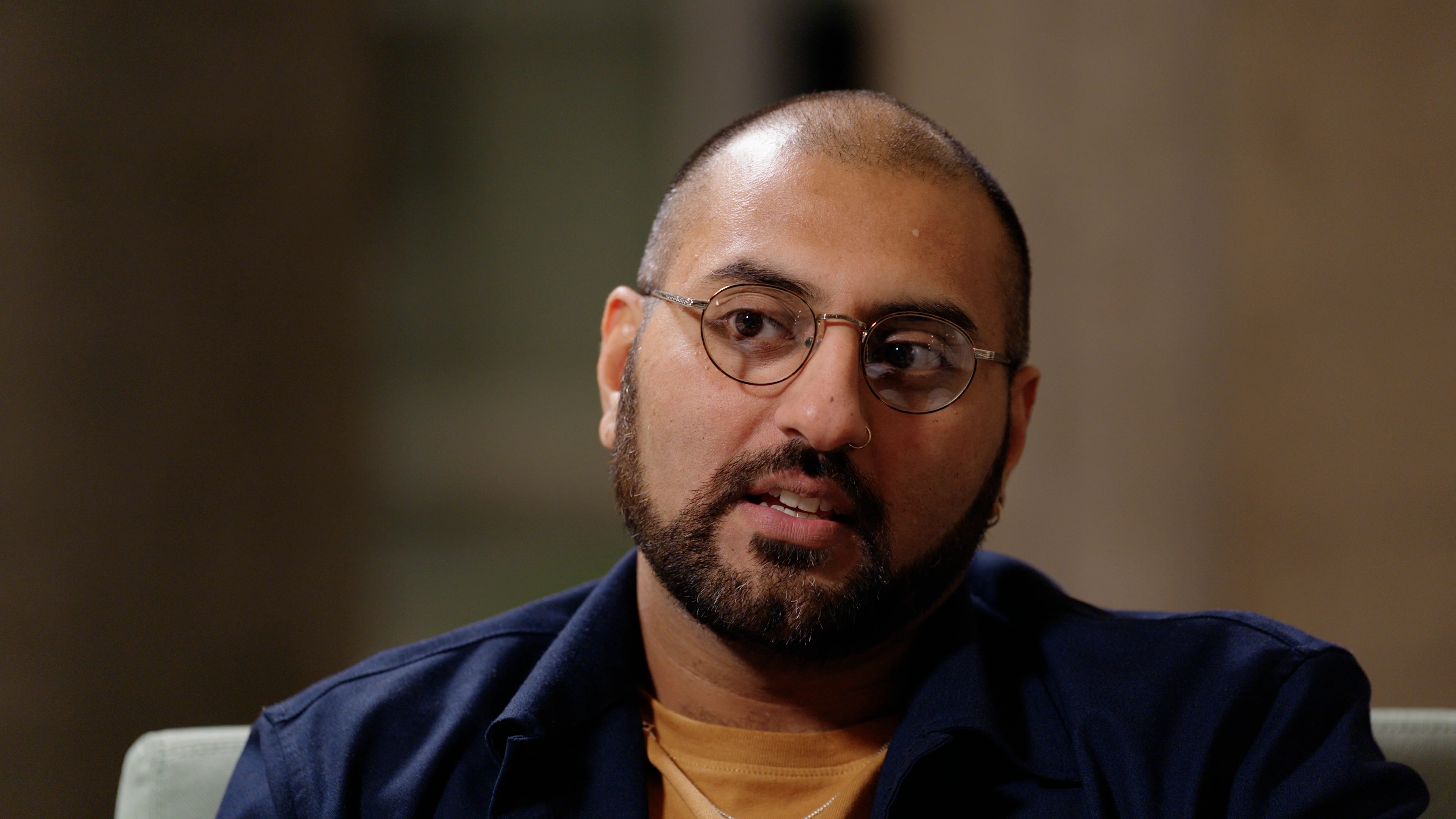
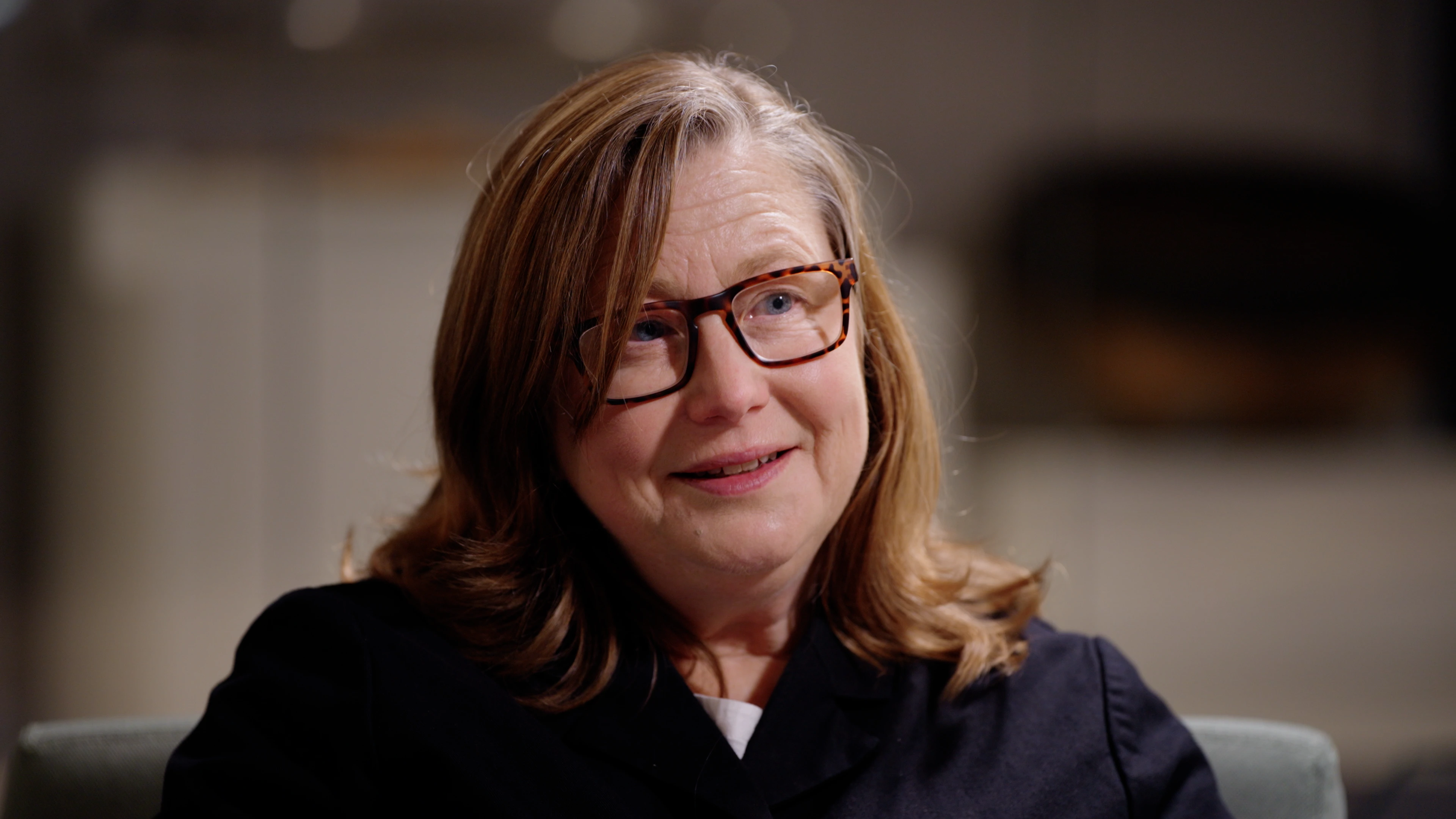
But for those intimate moments of deeper questions and personal revelations, we used camera D and E for tight close ups on their faces - this is where the micro expressions and energy in their eyes tell the story.
Psychology
Viewers disengage quickly, especially in long-form content.
The magic in an edit like this is to move between angles without anyone noticing. Each cut should feel natural and intentional, like echoing the way your eyes would move if you were there listening instead of the cameras.
Backing this is the production value, which subconsciously communicates credibility - clean lighting, depth, composition. Cumulatively, this all signals that the message matters.
And if the message matters, the audience leans in.
Lighting & Sound
We approach interview lighting in layers;
- Controlled key boomed overhead providing key light for each person, as well as subtle hair light for each person, this is how you achieve depth.
- Practicals (lights in the building) which display the backdrop.
- Subtle negative fill using the environment to create shadow contrast.
None of this is "flashy" but it creates a sense of the space being dimensional.
Audio is treated with the same intention, booming in shotgun mics rather than using lapels produces a clean and isolated sound of their voice while still capturing ambience of the space. adding to the grounded realism of the production.
Why We Do It
We come from a documentary background and that means we care about what happens in the room.
We didn't shoehorn in a 5-camera setup to flex, but rather because the subject matter justified it. When someone says the one sentence that defines the whole film, we know we have captured it properly, from every angle that matters.